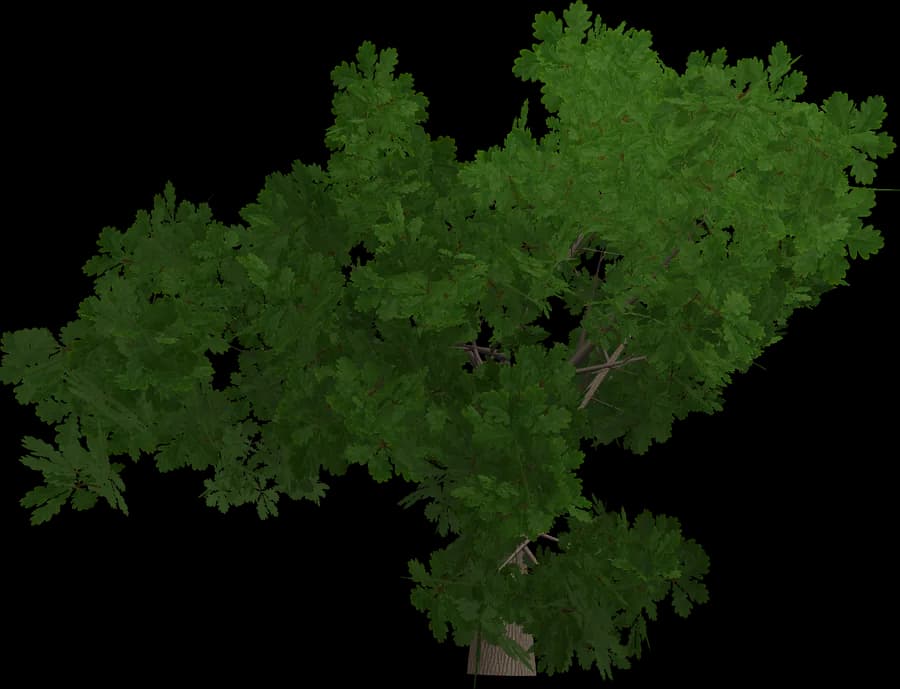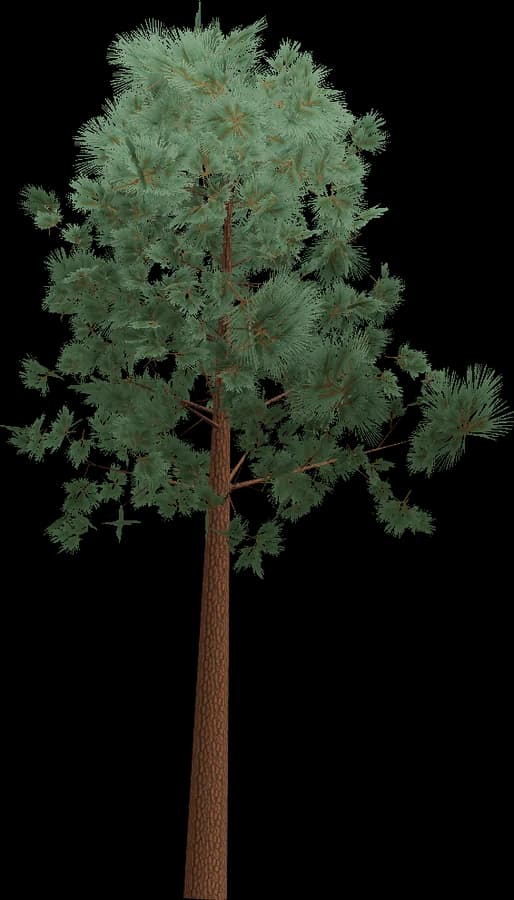
About the Realistic style
Realistic models use the PBR metal/roughness workflow that glTF 2.0, Unity, Unreal, Godot and three.js read directly.
- Bark: base colour, normal and roughness maps on the trunk and branches.
- Leaves: alpha-tested (masked) cards with leaf-cluster textures, not alpha-blended, so they write depth, need no sorting and cast correct shadows.
- Bark and leaves use separate materials, which keeps draw calls predictable and works well with GPU instancing.
- LOD0 is the close-up mesh; LOD1–LOD3 drop branches and leaf cards, so the last level is light enough for far distances.
Best for first- and third-person games, survival, open worlds and simulators on PC and consoles. On mobile, start from LOD1 or LOD2 as the nearest level and watch overdraw from leaf cards.
Using it in Unreal Engine
Unreal Engine 5 imports FBX, OBJ and glTF/GLB (through the Interchange framework).
- LODs: enable Import Mesh LODs for an FBX that contains LOD meshes, or add LOD1–LOD3 later in the Static Mesh Editor via LOD Import.
- Custom collision: FBX meshes named
UCX_<MeshName>are imported as convex collision. - Leaf materials: Blend Mode Masked, Two Sided, and the Two Sided Foliage shading model for light passing through leaves.
- Place trees with Foliage Mode or the PCG framework; foliage is rendered as instanced static meshes.
- Nanite supports masked materials since UE 5.1. Keep the classic LODs for mobile and other non-Nanite targets.