
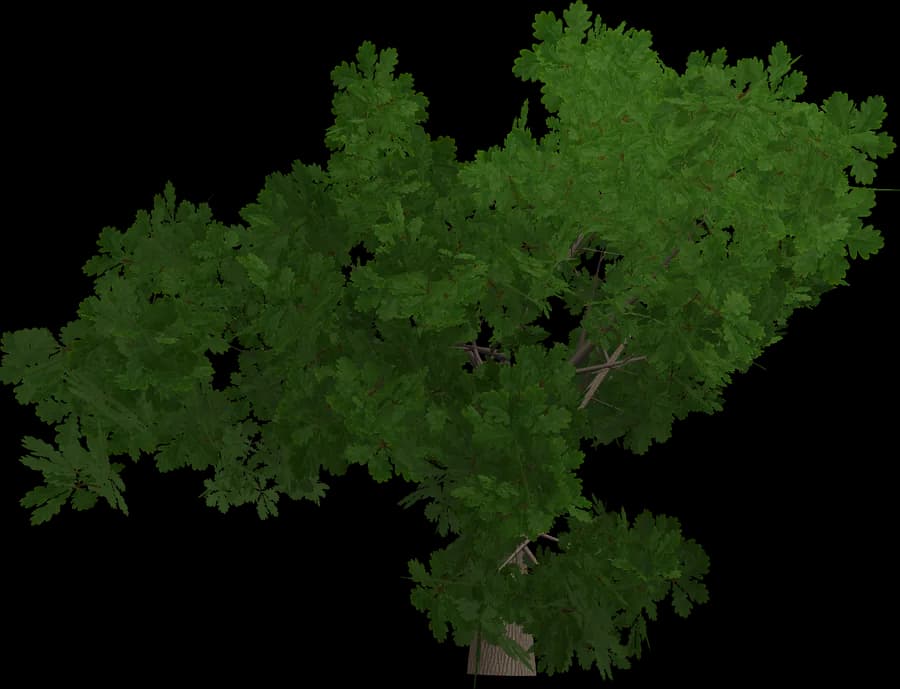
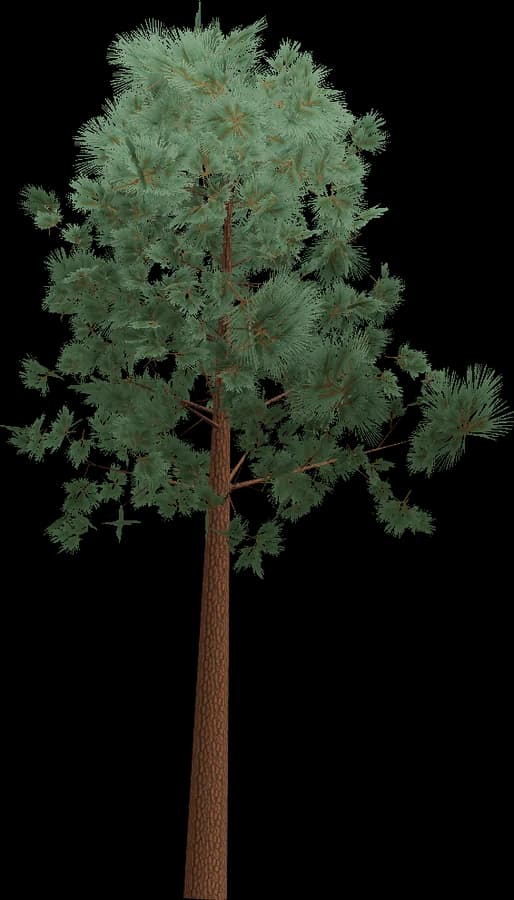
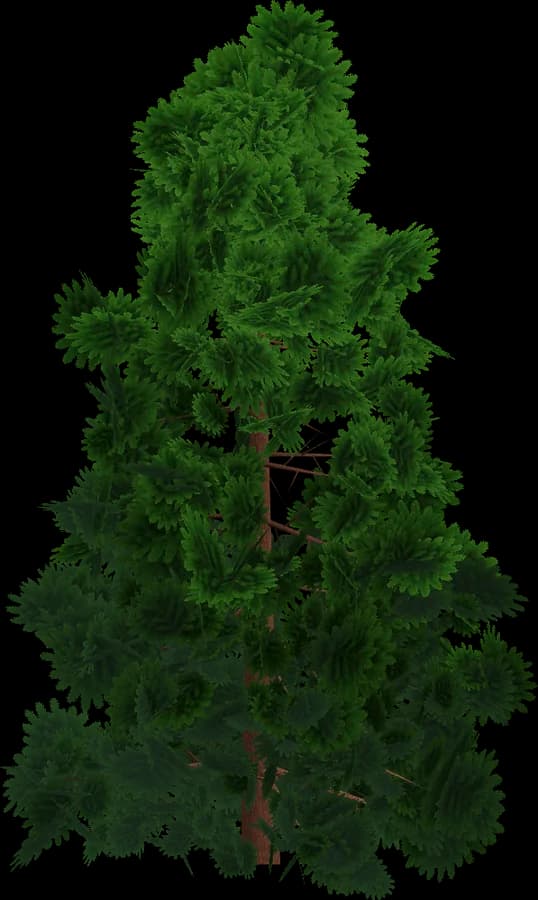
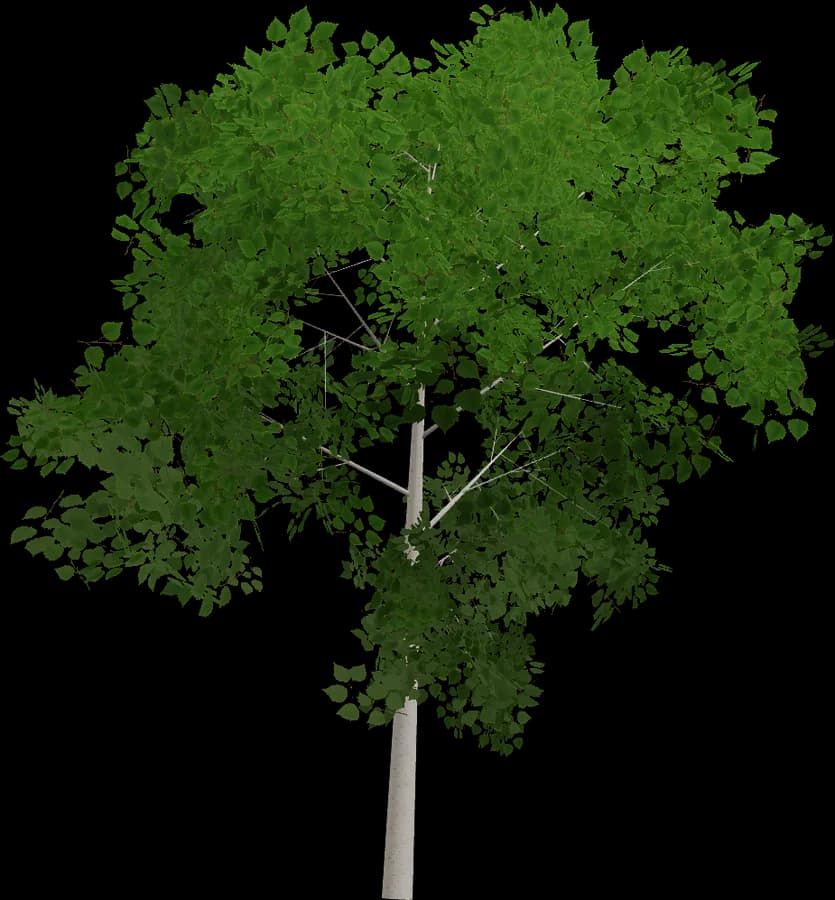
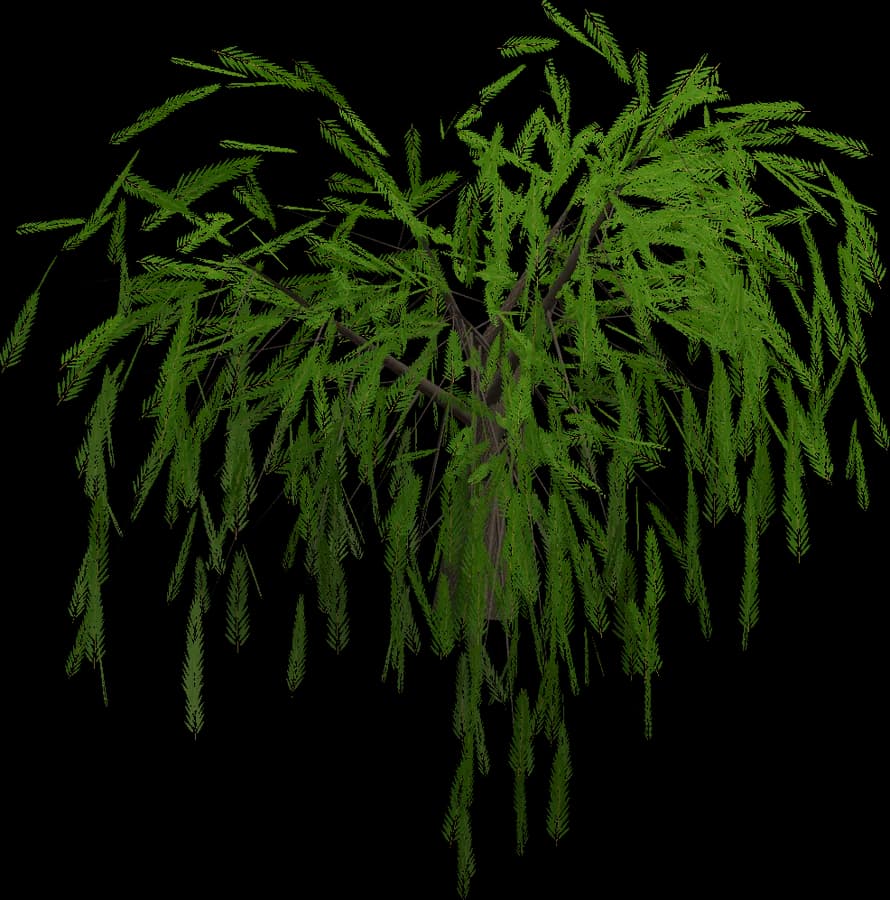
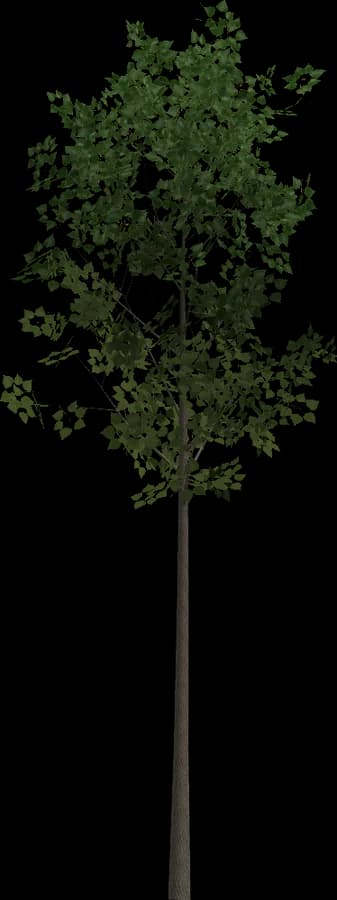
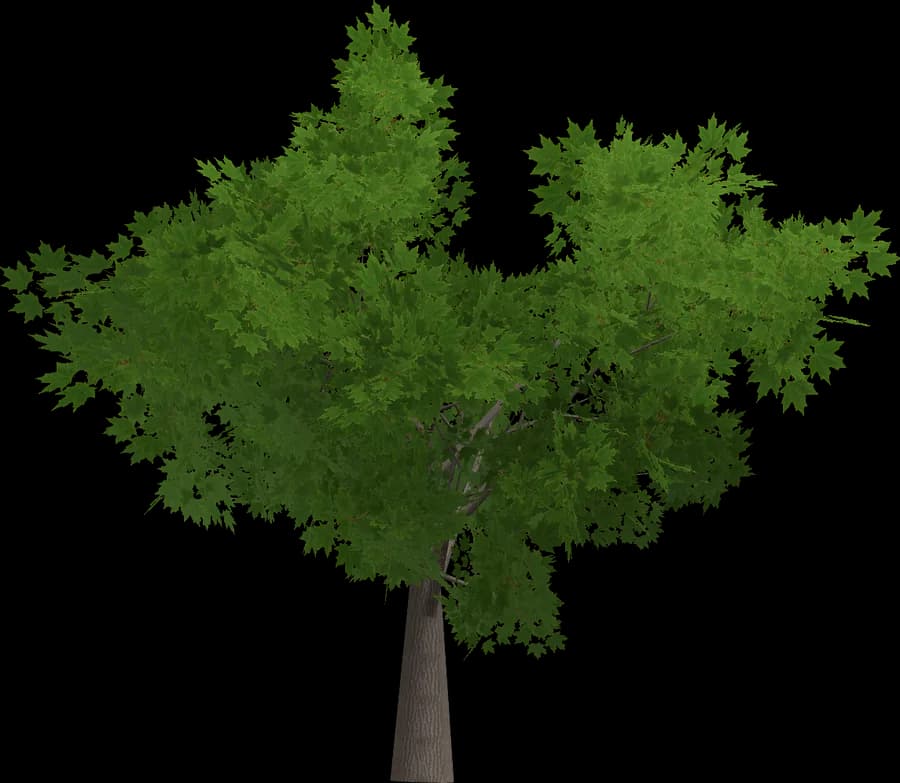
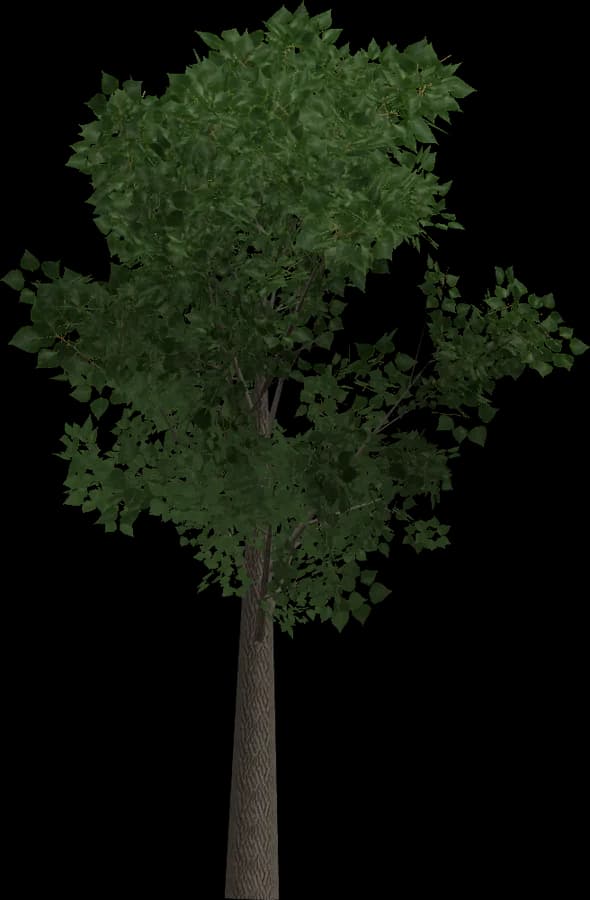
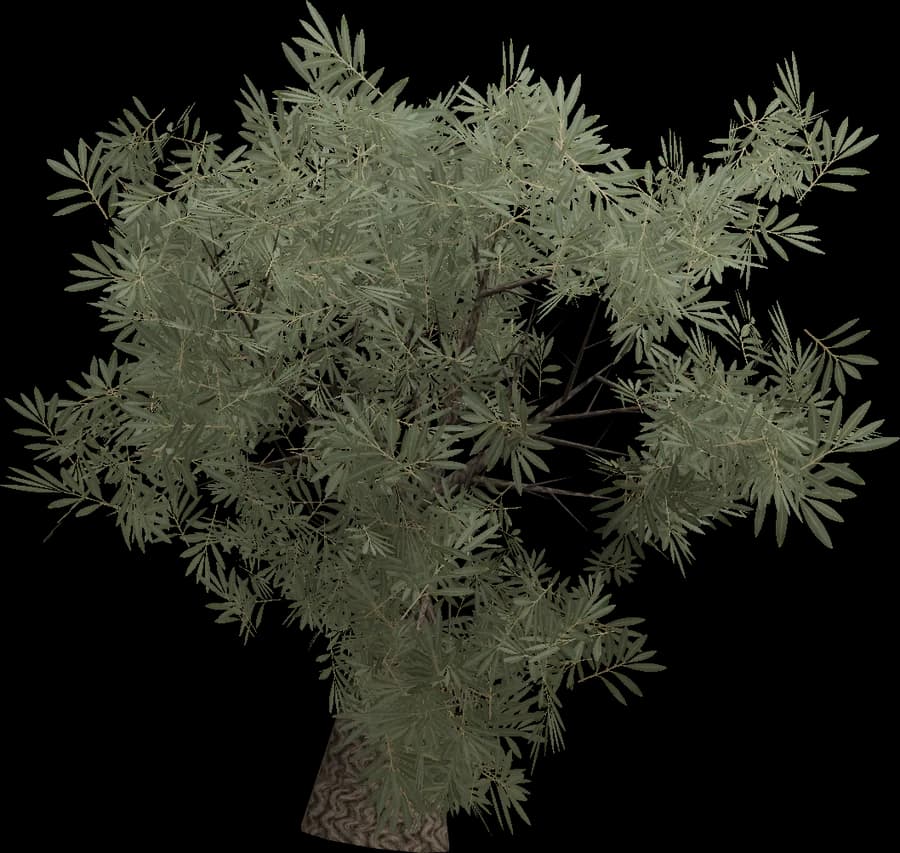
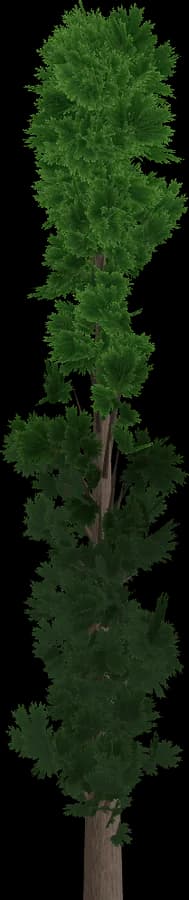
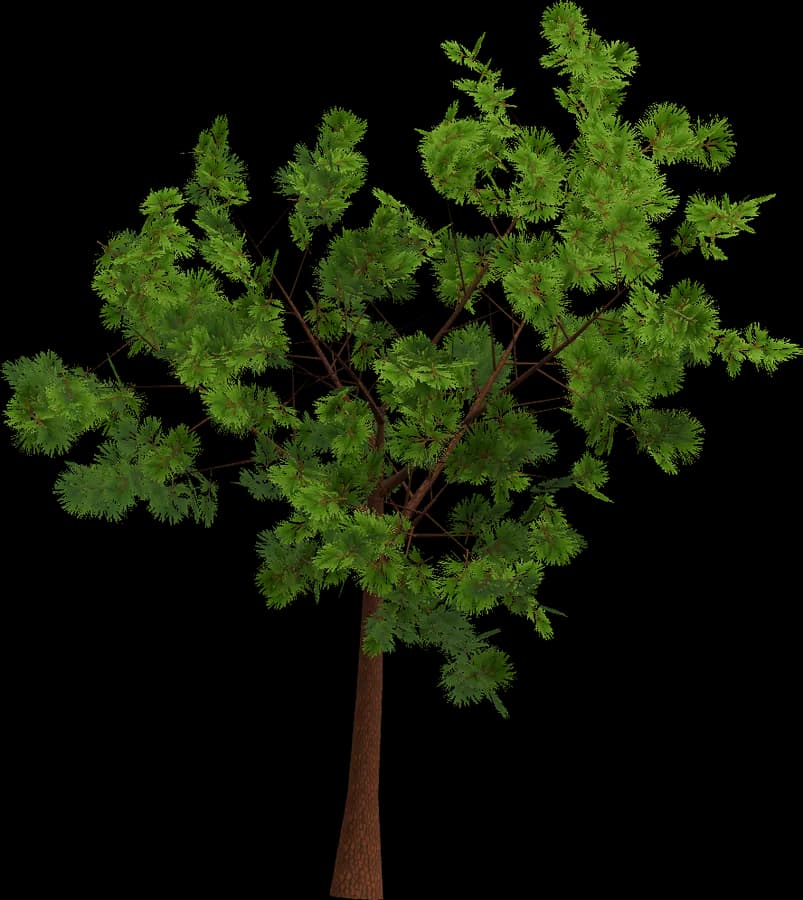
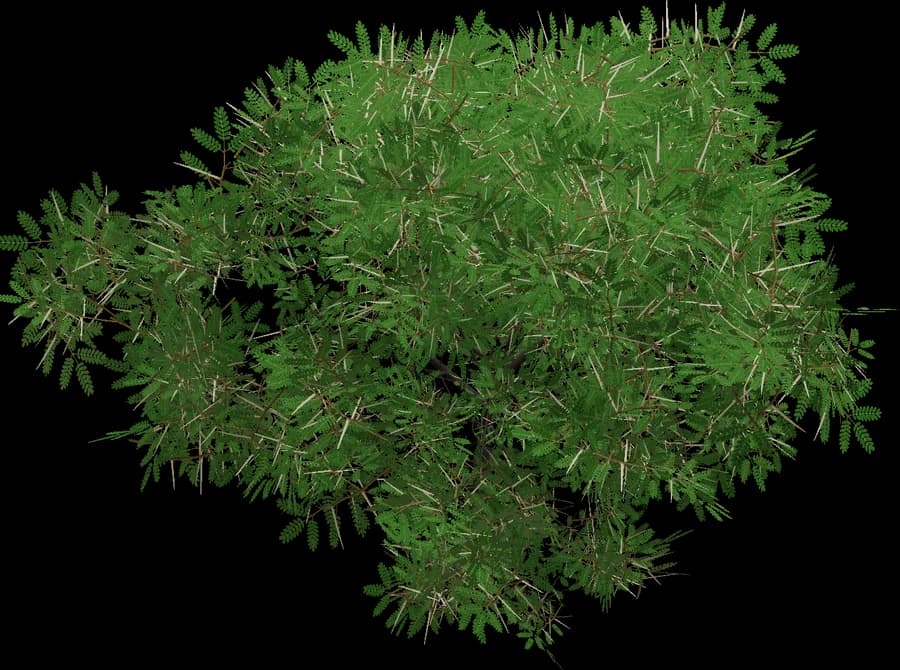
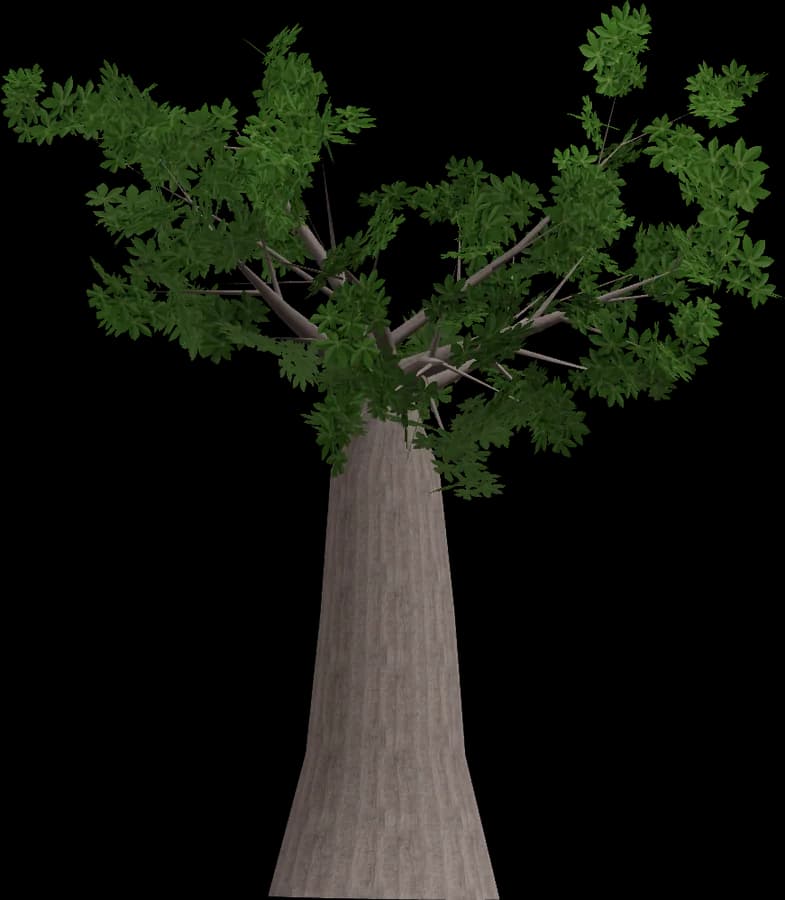
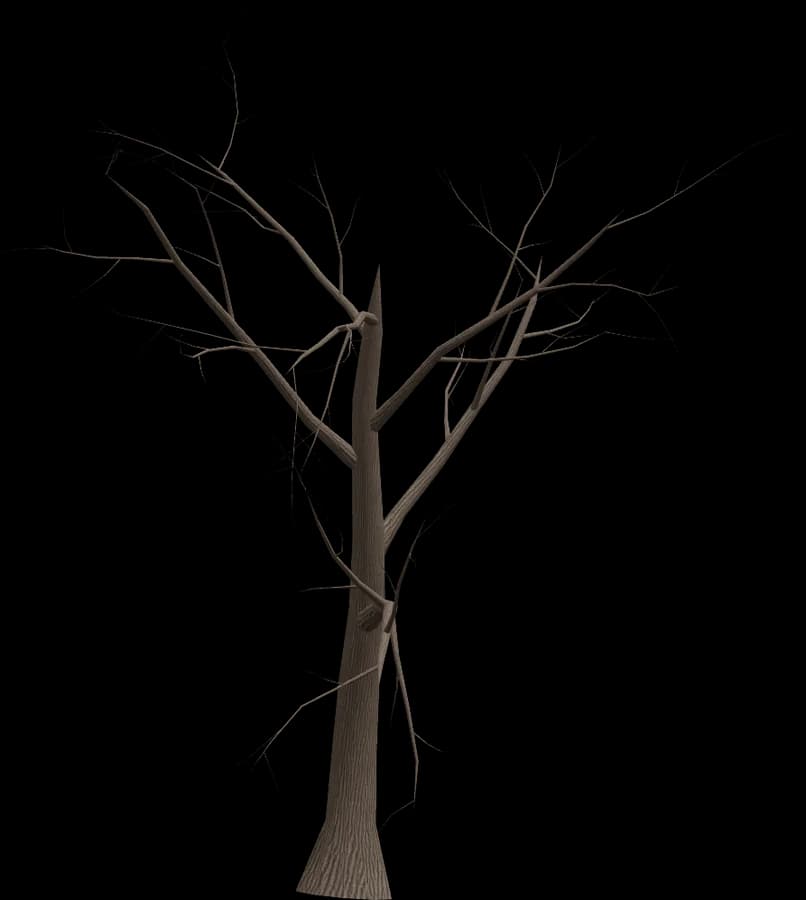
About the Low-poly style
Low-poly vegetation is the cheapest style to render and to ship.
- Flat shading: one normal per face gives the crisp faceted look; no normal maps.
- Colour lives in vertex colours (glTF COLOR_0), so there are no textures, no UV work and almost no video memory.
- Leaves are solid geometry, not alpha cards: no alpha testing and no transparent overdraw, which matters on mobile GPUs.
- One material can be shared by every model in the scene, so trees batch and instance easily.
- Typical budgets range from a few hundred to a couple of thousand triangles at LOD0.
A good fit for mobile, WebGL/WebGPU, VR, strategy, city builders and stylised indie games. In the engine, use a material that multiplies by vertex colour.
Using it in Godot
Godot 4 imports GLB/glTF natively — drop the file into the project — and FBX through the built-in ufbx importer (Godot 4.3+).
- Godot generates mesh LODs on import automatically. To use the hand-made LOD0–LOD3 instead, put them in separate MeshInstance3D nodes with Visibility Range Begin/End and a fade mode — Godot's HLOD system.
- Node-name suffixes such as
-color-colonlycreate collision shapes on import; collision can also be set up in Advanced Import Settings. - Leaves: StandardMaterial3D with Transparency = Alpha Scissor and Cull Mode Disabled; glTF alphaMode MASK maps to this automatically.
- For forests, MultiMeshInstance3D draws thousands of copies in one call, and visibility ranges work on it too.